Luce con garbo la pollera: Photographing the next generation of our Panameño family
There are photographs made to remember how someone looked, and there are photographs made to carry a story forward.
This collection is both.
My husband grew up in a large Panameño family where folklore is not something observed from a distance. His mamá, hermanos, primos y tíos learned these dances, performed them together, and continued sharing them at cultural events year after year. They even performed at our wedding, filling the celebration with movement, music, and an expression of home.
Now, the youngest generation is finally old enough to begin learning the routine themselves.
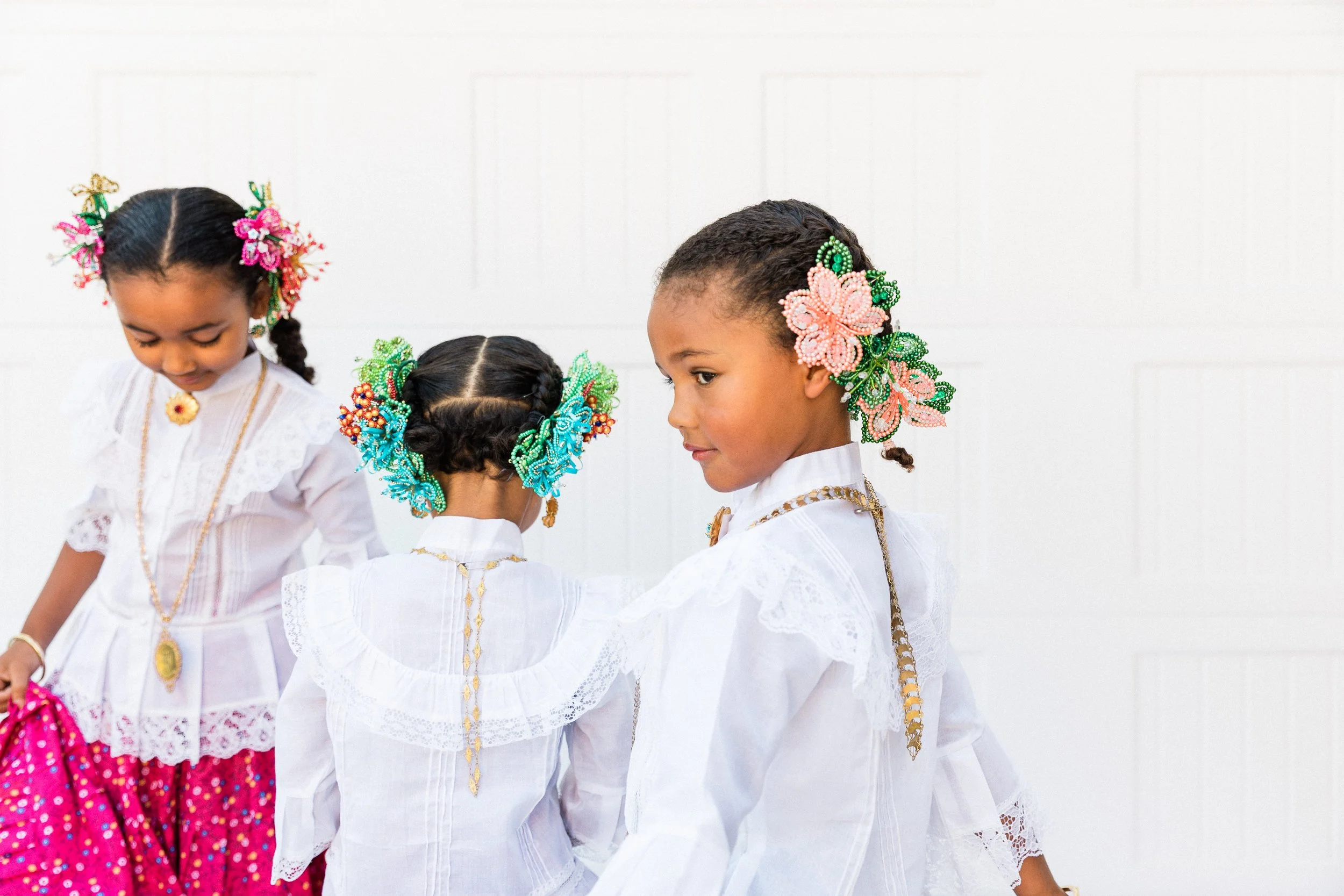
Watching them gather in their polleras and montunos felt like witnessing a family story turn another page. The children were not simply dressing for photographs. They were stepping into something that belonged to the generations before them, and that now belongs to them, too.
Tía Dalys, y tía Mayra adorned the girls’ hair with handmade beaded tembleques, delicate floral ornaments that tremble and catch the light as the tiny dancers move. Even while standing still, they hold the suggestion of dance. The gold jewelry carries its own visual language. The Cadena Chata, a flat-link gold chain, Mosquetas, the large circular gold pins, El Cabestrillo, the chain set with authentic coins framed in gold.
Each element contributes to something larger. Together, the lace, color, beads, coins, and gold become a living work of art.
There is a phrase that beautifully captures the presence and pride with which the dress is worn: luce con garbo la pollera. She wears the pollera with exquisite poise.
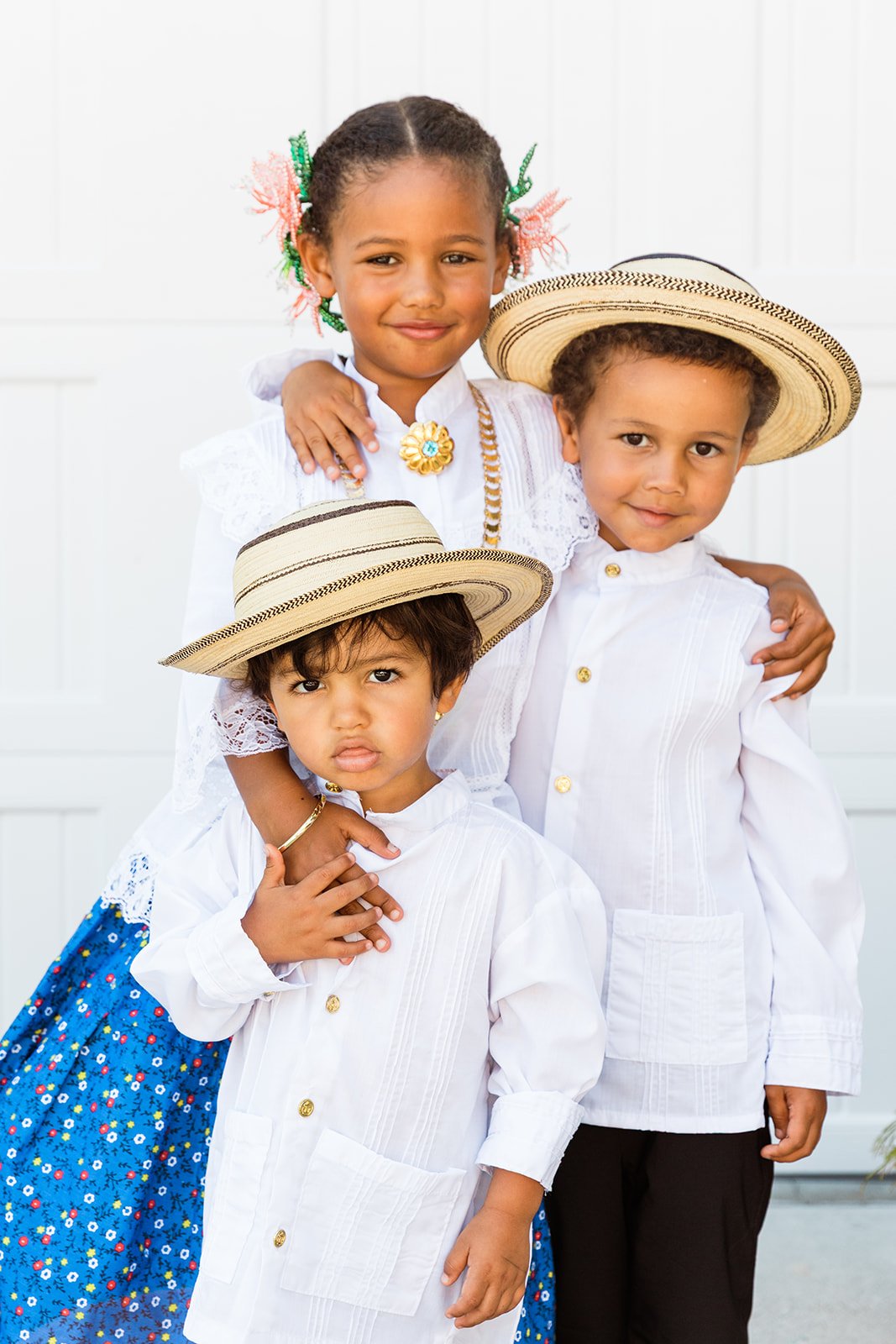
The boys wear the traditional montuno. The classic handwoven straw Sombrero Pintao shades their faces, while traditional cutarras complete the countryside dress. These artisanal sandals are meticulously woven from strips of raw cattle hide. Durable and breathable, they are closely tied to rural Panamanian identity.
And then there is the sound.
Panamanian folkloric celebrations are alive with voices rising above the movement and music. Even during the photoshoot, my cuñados couldn’t help themselves but let out the occasional grito, leaving the kids in a fit of laughter.
These sounds do more than punctuate the dance. They make celebration impossible to contain.
The children are still learning the steps. They are learning when to lift their skirts, how to move together, how to listen, and how to respond when the voices around them rise in el grito or la saloma.
They are also learning something less visible: culture survives because someone chooses to teach it, someone chooses to practice it, and someone chooses to pass it on.
One day, these children may be the adults gathering the next generation, fastening their gold, arranging their tembleques, shaping their hats, and teaching small feet where to step.
For now, they are at the beginning.
What a gift to photograph them there.




Behind My Lens
While photographing the children, I kept noticing the meeting of ceremony and childhood.
The clothing carried generations of artistry and meaning. Every bead, chain, pin, pleat, and carefully arranged detail had a name and a place. Inside all of that tradition were still children: giggling, shifting their weight, holding hands, forgetting where to stand, crying, and occasionally abandoning their shoes altogether.
That contrast felt important.
They do not yet understand everything these dances will come to mean. Right now, they are learning through repetition, through the adults who dress and guide them, and through the simple experience of doing it together. Their understanding will deepen as they do.
I chose to photograph part of this collection on film. Film asks me to pay closer attention before I press the shutter. I cannot immediately check what I made or ask a moment to happen again. I have to notice, decide, and trust.
For the individual portraits, I made them entirely on film. I was drawn to the softness of their expressions beside the extraordinary detail of the tembleques, lace, and gold. They looked entirely like themselves. They were not performing history for the camera. They were children beginning to find their own place within it.
That is what I hope these photographs preserve.
Not only how beautifully they were dressed or how carefully the traditions were presented, but what it looked like at the very beginning, when this culture was being placed gently into the hands of its next generation.